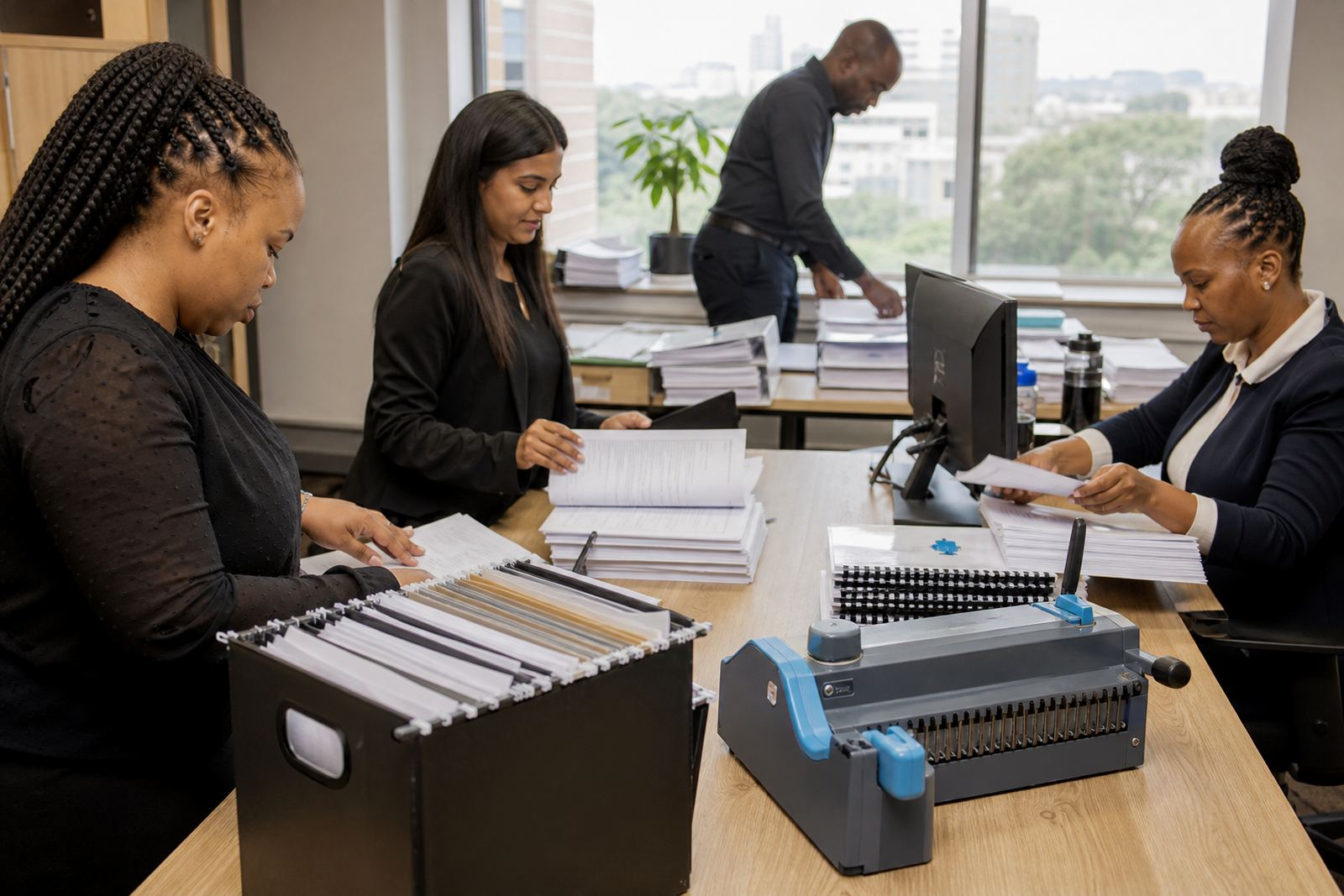


A transfer workflow that fitted a busy Sandton table
The main constraint was volume. Conveyancing files carry many repeated fields, yet each one has small differences that matter, from client names and property descriptions to dates and instruction notes. The practice also wanted a cleaner way to manage approved clauses, so staff did not pull wording from several old files or keep patching the same document by hand.
We designed the setup around conditional questionnaires, merge fields and clause banks. That let users enter matter data once, then feed it through the right template set, with optional sections appearing only when the file called for them. It suited a team that wanted structure and short manual steps.
- Conditional questionnaires for file-specific detail
- Merge fields for names, property data and dates
- Clause banks for approved conveyancing wording
- Version control for draft, review and issue stages
What we mapped into the platform
We mapped the most used conveyancing items first, then tied them to matter data fields that could be reused across the file. That included transfer forms, covering letters, letters to clients, correspondence packs and other paperwork that often sits beside the main transaction record.
The document structure also needed sensible review points. We built a flow where staff could draft, check, sign off and store the finished version in a controlled place. Secure cloud storage and POPIA-aware handling were part of the general design, with access kept to the people who needed the file for the work at hand.
- Transfer paperwork templates and related correspondence
- Matter data fields for property and client records
- Review and sign-off steps before issue
- Secure storage with access control in mind
The rollout across three working weeks
The rollout ran in phases over three weeks. The first stage covered template mapping and clause bank setup. The second stage moved into questionnaire design, matter data design and document migration. The final stage covered user training, admin training and go-live support while the team worked through real conveyancing files.
That sequence mattered because transfer matters cannot be interrupted for long. The practice wanted to keep working while the new structure was introduced, so we kept the build practical and grouped the tasks in a way that suited a live file environment.
- Week 1: mapping, template structure and clause review
- Week 2: questionnaires, matter data and migration
- Week 3: training, live use and workflow tuning
What changed in day-to-day file handling
Once the setup was in use, the team had fewer places to look for the same detail. A matter could be opened with the right core data, and the document set followed a more consistent path from first draft to final issue. That made internal checking easier and reduced the amount of patchwork editing on standard paperwork.
The practice also gained a cleaner handover between users. New team members could work from the same structure for every conveyancing file. In a branch or office that handles a steady flow of transfers, that kind of order helps keep the file trail readable.
- Less duplicated typing across common file types
- Cleaner handover between team members
- More consistent use of approved wording
- Better visibility of version history and file status
What we would carry into another conveyancing roll-out
We would keep the same order of work for another conveyancing practice: start with the most repeated documents, map the matter fields carefully, then build the questionnaires around the real file steps used by the team. That keeps the system close to the job.
For firms in Sandton and other South African centres, the useful part is a neat structure around the documents already in circulation, with sensible controls, clear wording and enough flexibility for the different matter paths a conveyancing team handles through the week.
- Start with the highest-use conveyancing templates
- Map matter data before expanding the library
- Keep review and issue steps visible
- Use training to anchor the new file habits
Key facts
| Project type | Conveyancing document automation setup |
|---|---|
| Client type | Small law firm conveyancing team |
| Town | Sandton, Johannesburg |
| Core build | Transfer templates, clause banks, conditional questionnaires |
| Timeline | 3 weeks |
| Key contacts | Thabiso Sibiya, Naledi Gumede, Johan Cassiem, Ayesha Hartnick, Lungile Nxumalo, Morne Khanye, Palesa Ndlovu |